

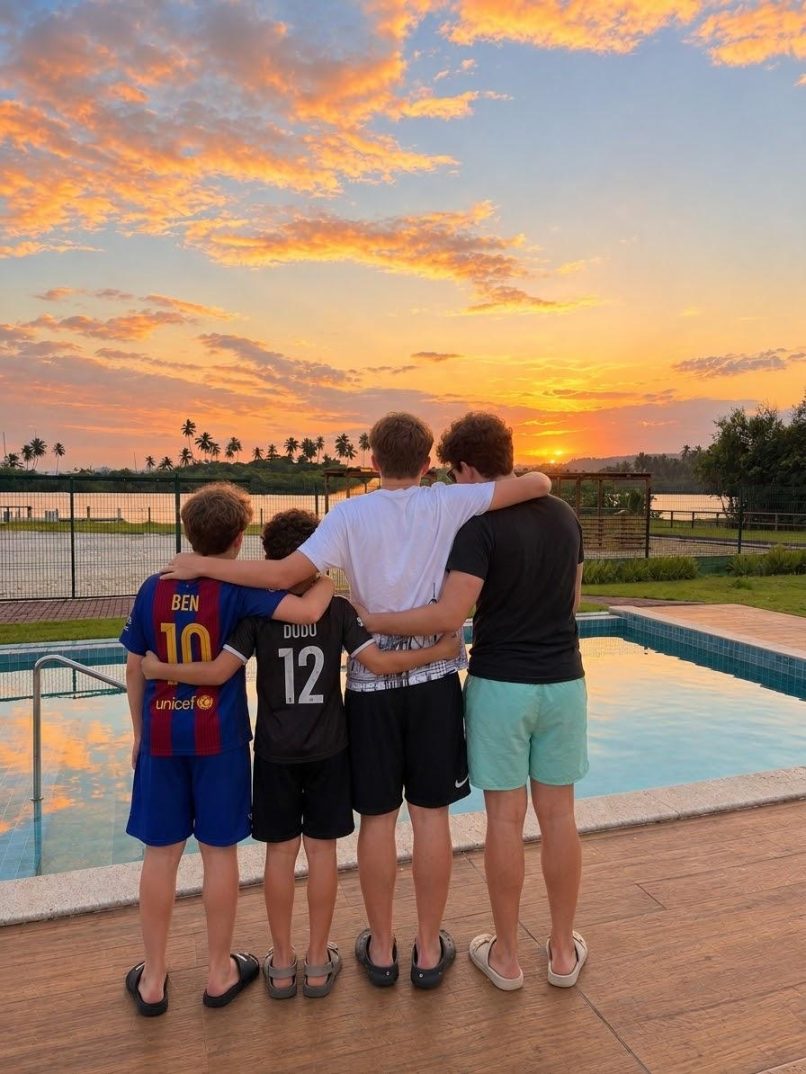
O ano letivo começou. Em Nova York, as escolas públicas voltaram às aulas em setembro, como acontece tradicionalmente na cidade, e com elas voltou também aquela conhecida operação quase militar que é retomar a rotina: acordar cedo, preparar as crianças, organizar mochilas, conferir horários, correr para o trabalho, enfrentar o trânsito, o trem, os compromissos e, no fim do dia, tentar ainda encontrar algum tempo para conversar.
Aqui, tudo parece ter horário. Tudo precisa ser planejado. E talvez seja justamente por isso que a nossa viagem ao Brasil tenha mexido tanto comigo este ano. Fomos para o Brasil em agosto e ficamos três semanas. Foram um período em que meus filhos puderam experimentar uma infância um pouco diferente. Uma infância mais espontânea, mais coletiva e, de certa forma, mais leve. É que o Brasil é muito mais kid-friendly.
Não necessariamente apenas porque tenha mais praias, mais atrações ou melhores estruturas. Mas porque as crianças parecem ter mais espaço para simplesmente serem crianças. Podem chegar à casa de alguém sem que isso precise ser combinado com duas semanas de antecedência. Podem brincar com os primos, com os filhos dos amigos, com crianças que acabaram de conhecer a qualquer momento. Um adulto sempre aparece para oferecer alguma coisa para comer, o que é incrível para um pré-adolescente e um adolescente. Alguém pergunta se está tudo bem. Alguém chama para brincar. Existe uma rede. E essa rede faz diferença.
Meu filho mais novo, que tem 12 anos, sentiu isso de uma maneira que eu não esperava. Talvez porque esteja chegando a uma idade em que começa a perceber as relações de outra forma. Talvez porque tivesse passado três anos sem ir ao Brasil. Ou talvez porque três semanas de convivência tenham sido suficientes para ele reencontrar uma parte de si mesmo que estava adormecida. Quando chegou a hora de voltar para Nova York, ele chorou. E continuou chorando depois que voltamos. Até hoje, ele fala que quer morar no Brasil. No começo, eu tentava argumentar com ele. “Você acha que, se a gente mudar para o Brasil, sua vida vai ser futebol, praia e piscina?” E ele me respondeu, com a simplicidade que só uma criança consegue ter: “Não, não é isso. No Brasil tem família.” E então ele começa a listar. Tem a vovó Myrtes. Tem o vovô Ricardo, a Maria. Tem tantos primos… Gui, Dudu… Tem a tia Myrna. Tem o tio Eduardo. Tem o tio André. O Tio Rodrigo.
É interessante perceber que, para ele, o Brasil não é uma ideia. Não é praia, futebol, piscina ou férias. O Brasil tem nome e sobrenome. Tem rosto. Tem abraço. Tem gente. E foi aí que eu entendi que o que ele estava sentindo não era exatamente saudade do Brasil. Era saudade de pertencimento. A família que vive aqui também ama meus filhos. Mas a maneira americana de viver a família é diferente. Cada um está ocupado com sua própria rotina, seus compromissos, trabalho, escola, responsabilidades. Os encontros muitas vezes precisam ser planejados e acabam acontecendo apenas em datas comemorativas — Dia dos Pais, Thanksgiving, Natal, aniversários.
Meus filhos quase não convivem com os primos americanos. E, para mim, isso sempre foi uma pena. Mas, até essa viagem, eu nunca tinha parado para pensar no que isso significava para uma criança de 12 anos. No Brasil, durante aquelas três semanas, meus filhos não precisavam marcar horário para serem crianças. Eles simplesmente eram. E isso me fez pensar em uma coisa que nós, adultos, muitas vezes esquecemos. Nova York é uma cidade extraordinária. É uma cidade de oportunidades, diversidade, cultura, trabalho e possibilidades que poucas cidades no mundo conseguem oferecer. Para muita gente, viver aqui é um sonho. Mas existe uma diferença entre uma cidade ser boa para construir uma vida e ser boa para viver a infância.
Nova York pode ser maravilhosa para os adultos. Para as crianças, às vezes, pode ser uma cidade cansativa. Aqui, uma criança pode morar em um condomínio cheio de pessoas e, ainda assim, passar horas sem conversar com ninguém. Pode ter uma agenda cheia de atividades e sentir falta de alguém simplesmente dizendo: “Desce para brincar.” As amizades também exigem logística. Um playdate precisa ser marcado. Os pais precisam conversar antes. Alguém precisa levar. Alguém precisa buscar. É preciso encontrar um espaço na agenda.
No Brasil, muitas vezes, a convivência simplesmente acontece. E talvez esse seja um dos verdadeiros luxos que sentimos falta quando moramos longe de casa. Não é necessariamente ter mais dinheiro. Não é ter uma casa maior. Não é ter mais coisas. É ter gente. Gente por perto. Gente que aparece. Gente que oferece uma comida gostosa, pergunta pelo seu filho, segura sua mão, conversa na calçada e transforma uma tarde comum em uma memória.
O início do ano letivo me trouxe de volta à realidade de Nova York: horários, responsabilidades, compromissos e aquela corrida diária que conhecemos tão bem. Mas meu filho ainda parece estar vivendo um pouco no Brasil. E talvez ele esteja me ensinando alguma coisa. Talvez a pergunta não seja se Nova York é ou não o lugar dos nossos sonhos. Talvez a pergunta seja: o que exatamente estamos procurando quando dizemos que queremos uma vida melhor para nossos filhos? Porque, no fim, uma vida melhor pode significar uma boa escola, segurança, oportunidades e estabilidade. Mas também pode significar uma infância cercada de pessoas que a gente ama.
Depois de ver meu filho chorar por vários dias porque não queria voltar, eu não consigo mais olhar para essa diferença da mesma maneira. Às vezes, o lugar que parece um sonho para os adultos não é necessariamente o lugar que uma criança chama de lar. E talvez seja isso que o Brasil tenha me lembrado. Que, quando uma criança diz “eu quero voltar para casa”, talvez ela não esteja falando de um país. Talvez esteja falando das pessoas que fazem um lugar parecer casa.
English
Between School, New York, and the desire to go home
The school year has begun. In New York City, public schools returned in September, as they traditionally do, and with them came that familiar, almost military operation of getting back into a routine: waking up early, getting the kids ready, organizing backpacks, checking schedules, rushing to work, dealing with traffic, public transportation, appointments, and, at the end of the day, still trying to find some time to talk.
Here, everything seems to have a schedule. Everything needs to be planned. And perhaps that is precisely why our trip to Brazil affected me so deeply this year. We went to Brazil in August and stayed there for three weeks. For this period of time, my children experienced a slightly different kind of childhood. A childhood that was more spontaneous, more communal, and, in a way, lighter. Brazil is simply much more kid-friendly.
Not necessarily only because it has more beaches, more attractions, or better infrastructure. But because children seem to have more space to simply be children. They can show up at someone’s house without having to arrange it two weeks in advance. They can play with their cousins, their friends’ children, or kids they have just met anytime. An adult always seems to appear with something delicious for them to eat. Someone asks if they are okay. Someone invites them to play. There is a very supportive network. And that network makes a difference.
My younger son, who is 12, felt this in a way I never expected. Maybe because he is reaching an age when he is beginning to understand relationships differently. Maybe because he had gone three years without visiting Brazil. Or maybe three weeks of being surrounded by family was simply enough for him to reconnect with a part of himself that had been dormant. When it was time to return to New York, he cried. And he kept crying after we came home. To this day, he says he wants to live in Brazil. At first, I tried to reason with him. “Do you think that if we moved to Brazil, your life would be all about soccer, beaches, and swimming pools?” And he answered with the kind of simplicity only a child can have: “No, it’s not that. In Brazil, there’s family.” And then he starts listing them. There’s Grandma Myrtes. There’s Grandpa Ricardo. There are so many cousins… Gui, Dudu… Aunt Myrna. Uncle Eduardo. Uncle André. Uncle Rodrigo
And that is when I realized something. For him, Brazil is not an idea. It isn’t about beaches, soccer, swimming pools, better quality of life or vacations. Brazil has names and faces. Brazil has hugs. Brazil has people. What he was missing wasn’t exactly Brazil. He was missing a sense of belonging. The family that lives here loves my children too. But the way family life works is different. Everyone is busy with their own routines, commitments, work, school, and responsibilities. Getting together often requires planning, and family gatherings tend to happen only around special occasions — Father’s Day, Thanksgiving, Christmas, birthdays.
My children barely spend time with their American cousins. And, to me, that has always been a shame. But until this trip, I had never really stopped to think about what that meant to a 12-year-old. In Brazil, during those three weeks, my children didn’t have to schedule time to be children. They simply were. And that made me think about something we adults often forget. New York is an extraordinary city. It is a city of opportunities, diversity, culture, work, and possibilities that few cities in the world can offer. For many people, living here is a dream. But there is a difference between a city being a good place to build a life and being a good place to experience childhood.
New York can be wonderful for adults. For children, sometimes, it can be an exhausting city. Here, a child can live in a building full of people and still spend hours without talking to anyone. They can have a full schedule of activities and still miss someone simply saying: “Come downstairs and play.”Friendships also require logistics. A playdate has to be scheduled. Parents have to talk beforehand. Someone has to take the child. Someone has to pick them up. There has to be room for it on the calendar.
In Brazil, very often, being together simply happens. And perhaps that is one of the real luxuries we miss when we live far from home. It isn’t necessarily having more money. It isn’t having a bigger house. It isn’t having more things. It’s having people. People nearby. People who show up. People who offer you a plate of delicious food, ask about your child, hold his hand, talk to him on the sidewalk, and turn an ordinary afternoon into a memory.
The beginning of the school year brought me back to the reality of New York: schedules, responsibilities, commitments, and that daily rush we know so well. But my son still seems to be living a little bit in Brazil. And perhaps he is teaching me something. Maybe the question isn’t whether New York is or isn’t the place of our dreams. Maybe the question is: what exactly are we looking for when we say we want a better life for our children? Because, in the end, a better life can mean a good school, safety, opportunities, and stability. But it can also mean a childhood surrounded by people we love.
After watching my son cry for several days because he didn’t want to come back, I can no longer look at this difference in quite the same way. Sometimes, the place that seems like a dream to adults isn’t necessarily the place a child calls home. And perhaps that is what Brazil reminded me of. That when a child says, “I want to go home,” maybe they aren’t talking about a country. Maybe they are talking about the people who make a place feel like home.