
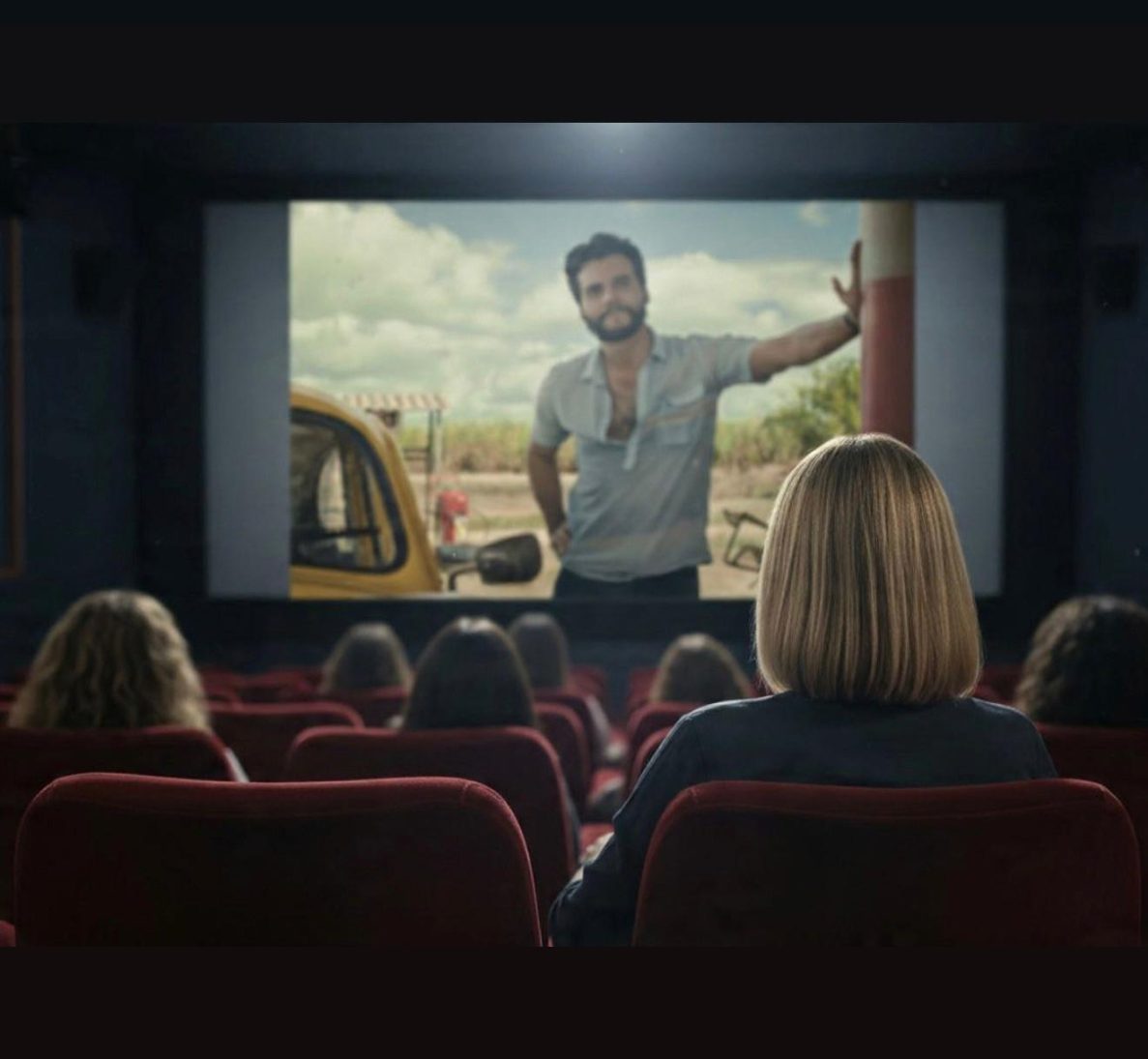
Entrei no cinema para assistir O Agente Secreto achando que veria apenas um filme.
Saí de lá com a sensação de ter voltado para casa — um lugar que existe mais na memória do que no espaço físico.
Era a pré-estreia. As luzes, os convidados, o burburinho elegante de quem ama cinema. Wagner Moura estava ali. O diretor, Kleber Mendonça Filho, também. Mas, para mim, nada disso era o centro. O centro estava em algo invisível, silencioso e profundamente íntimo: a presença da ausência do meu pai.
Sentada naquela sala escura, eu não era apenas espectadora.
Eu era filha.
Eu era memória.
Eu era consequência.
Meu pai e o preço de falar demais
Sou filha de Tobias Granja, advogado e jornalista em Maceió, assassinado aos 37 anos, durante a ditadura militar, por algo simples — e, ao mesmo tempo, perigosíssimo naquela época: falar demais.
Falar contra políticos corruptos.
Falar com coragem.
Falar com a convicção de quem acreditava que a justiça não deveria pedir licença.
Meu pai acreditava na palavra. Na lei. No jornalismo como ferramenta de transformação. Ele tentou exercer sua profissão com ética em um tempo em que ética era vista como afronta. Pagou com a própria vida.
Cresci sem sua mão me guiando, mas nunca sem sua história me atravessando.
Quando o cinema vira gatilho de memória
Quando assisti “Ainda Estou Aqui”, com Fernanda Torres, saí do cinema aos prantos. Não foi apenas um choro de emoção — foi um choro de reconhecimento. O filme me devolveu lembranças que não vivem organizadas na memória, mas no corpo.
Lembrei da época em que vivíamos com escolta 24 horas por dia. Dos guardas trocando de turno na porta de casa. Do som dos rádios. Das armas visíveis. Do medo constante que, na infância, a gente normaliza porque não conhece outro jeito de viver.
Não sei dizer exatamente quanto tempo durou. Meses? Anos? A memória falha — mas a sensação permanece.
Tudo isso porque minha mãe, Myrtes Granja, meteu a boca no trombone. Ela não aceitou o silêncio. Foi aos jornais, às TVs, pediu justiça em voz alta. Nossa casa virou ponto de passagem: repórteres, câmeras, jornalistas, amigos, familiares, policiais. Um movimento incessante tentando nos proteger.
Já que não conseguiram proteger meu pai.
Quando a ficção toca a ferida real
O Agente Secreto se passa nos anos finais da ditadura. Coincidentemente em 1977, o ano em que eu nasci. Wagner Moura interpreta um homem vigiado, perseguido, tentando sobreviver em um país que transforma cidadãos em alvos. Mas, acima de tudo, ele interpreta um pai tentando proteger o filho.
E foi aí que o filme me alcançou de um jeito diferente do outro.
Enquanto Ainda Estou Aqui me levou às lágrimas da infância vivida sob ameaça, O Agente Secreto me colocou no lugar do adulto que compreende. Que enxerga o sistema. Que entende o medo não como sensação difusa, mas como método.
Em várias cenas, senti o nó preso na garganta. Porque aquela tensão não era apenas cinematográfica — ela fazia parte da minha origem. A paranoia, o silêncio imposto, a sensação constante de perigo. Tudo aquilo não era ficção para mim. Era herança.
Enquanto o personagem lutava para salvar o filho, eu pensava no meu pai tentando apenas trabalhar. Escrever. Defender. Denunciar. Criar seus filhos.
Ele não conseguiu ficar.
Eu fiquei.
E carrego.
Ser mãe depois da violência política
Hoje, escrevo esta coluna como mãe.
E talvez seja isso que torne tudo ainda mais intenso.
Porque quando a gente se torna mãe, o passado muda de lugar. A dor deixa de ser só nossa — ela passa a dialogar com o futuro. A violência política não mata apenas quem cai. Ela atravessa gerações, molda silêncios, medos e escolhas.
Ser mãe, para mim, é também um ato de resistência.
É decidir que a história não termina no trauma.
É ensinar que coragem pode ser herdada, mesmo quando o abraço foi interrompido cedo demais.
Penso no meu pai.
Penso na minha mãe, que gritou quando mandaram calar.
Penso nos meus filhos.
E penso no quanto proteger também é lembrar — e no quanto lembrar é um ato político.
Cinema como memória e justiça simbólica
Naquela sala escura, percebi o poder que o cinema brasileiro tem de devolver histórias que tentaram apagar. O Agente Secreto não é apenas um filme sobre a ditadura — é um espelho para famílias como a minha. Assim como Ainda Estou Aqui, ele não nos deixa esquecer.
Ver Wagner Moura escolher contar essa história, em português, com raízes tão profundas no Brasil, foi emocionante. Transformar dor em arte é uma forma de justiça simbólica. É dizer: isso aconteceu. Isso importa. Isso não será esquecido.
Para meu pai
Se meu pai estivesse vivo, talvez estivesse naquela plateia.
Talvez estivesse escrevendo uma crítica afiada.
Talvez estivesse orgulhoso.
Eu não sei.
O que sei é que, ao sair do cinema, senti algo raro: uma paz triste, mas serena. Como se, por algumas horas, ele tivesse caminhado ao meu lado. Como se o cinema tivesse aberto um portal entre o que foi tirado e o que permaneceu.
E é por isso que continuo escrevendo.
Como mãe.
Como filha.
Como alguém que acredita que contar histórias também é uma forma de manter vivos aqueles que tentaram silenciar.
Porque, no fim, ser mãe também é isso:
transformar dor em sentido,
memória em amor,
e silêncio em voz.
(English)
The Secret Agent: The Film that brought me home
I walked into the theater expecting to watch a film.
I walked out feeling like I had come home — to a place that exists more in memory than in geography.
It was the premiere of The Secret Agent. The lights, the guests, the quiet excitement of people who love cinema. Wagner Moura was there. Director Kleber Mendonça Filho too. But none of that was the center for me. The center was something invisible, silent, and deeply personal: the presence of my father’s absence.
Sitting in that dark room, I wasn’t just an audience member.
I was a daughter.
I was memory.
I was the result of a story cut short.
My father and the cost of speaking out
I am the daughter of Tobias Granja, a lawyer and journalist from Maceió, assassinated at 37 years old during Brazil’s military dictatorship. His crime was simple — and deadly at the time: he spoke too much.
He spoke against corruption.
He spoke with courage.
He spoke because he believed justice should never whisper.
My father believed in words. In law. In journalism as a tool for change. He tried to work with integrity in a time when integrity was dangerous. He paid with his life.
I grew up without his physical presence — but never without the weight of his story.
When cinema awakens buried memories
When I watched “I’m Still Here” (Ainda Estou Aqui), starring Fernanda Torres, I left the theater in tears. Not just emotional tears — but tears of recognition.
The film brought back memories of the time we lived under 24-hour police escort. Guards changing shifts at our door. Radios crackling. Guns visible. Fear normalized because, as a child, I didn’t know another way of living.
I can’t say how long it lasted. Months? Years? Memory blurs — but the feeling never left.
All of it because my mother, Myrtes Granja, refused silence. She went to newspapers and TV stations demanding justice. Our house became a crossroads of reporters, cameramen, journalists, friends, family — and police officers trying to protect us.
Still, they couldn’t protect my father.
When fiction touches a real wound
In The Secret Agent, Wagner Moura plays a man under surveillance, trapped in fear, trying to survive in a country that turns its citizens into targets. Above all, he plays a father trying to protect his child.
That’s where the film reached me differently.
I’m Still Here brought me back to the child living under threat.
The Secret Agent placed me in the body of the adult who understands the system — who recognizes fear as a political tool.
Scene after scene, the familiar knot formed in my throat. That tension wasn’t just cinematic — it was inherited. The fear, the silence, the constant sense of being watched. That wasn’t fiction for me. It was legacy.
As the character fought to save his son, I thought about my father simply trying to work. To write. To defend. To expose. To raise his children.
He didn’t get to stay.
I did.
And I carry that.
Motherhood after political violence
Today, I write this as a mother.
And that changes everything.
Political violence doesn’t end with the victim. It echoes through generations, shaping fears, silences, and choices.
Being a mother, for me, is an act of resistance.
It’s refusing to let trauma be the final chapter.
It’s teaching that courage can be inherited, even when the embrace was taken too soon.
I think of my father.
I think of my mother, who spoke when silence was demanded.
I think of my children.
And I understand that remembering is also a form of protection — and memory itself is political.
Cinema as memory and symbolic justice
That night, I understood the power of Brazilian cinema to restore stories meant to disappear. The Secret Agent, like I’m Still Here, is not just a film about dictatorship — it’s a mirror for families like mine.
Watching Wagner Moura choose to tell this story, in Portuguese, deeply rooted in Brazil’s history, was moving. Turning pain into art is symbolic justice. It says: this happened. This matters. This will not be erased.
For my father
If my father were alive, maybe he would have been in that audience.
Maybe he would have written a sharp review.
Maybe he would have been proud.
I don’t know.
What I do know is that when I left the theater, I felt something rare: a quiet, bittersweet peace. As if, for a few hours, he had walked beside me. As if cinema had opened a bridge between what was taken and what remains.
And that’s why I keep writing.
As a mother.
As a daughter.
As someone who believes that telling stories keeps alive those who were meant to be silenced.
Because in the end, motherhood is also this:
turning pain into meaning,
memory into love,
and silence into voice.